
Introduction: Time Travel—Fantasy or Future?
From H.G. Wells’ The Time Machine to Marvel’s Avengers: Endgame, time travel has fascinated us for centuries. Who wouldn’t want to glimpse the distant future, relive a cherished moment, or prevent a historical catastrophe?
But how much of it is just fiction, and how much is grounded in actual physics? Surprisingly, modern science suggests that time travel may not be entirely impossible—it’s just incredibly complex.
In this article, we explore the theoretical foundations, real-world physics, and the frontiers of what might be possible in time travel.
What Is Time, Really?
Before we can talk about traveling through time, we need to understand what time is. In physics, time is not an independent flow—it’s woven into the fabric of space itself, forming what Einstein called spacetime.
According to Einstein’s Theory of Relativity:
- Time is relative: it flows at different rates depending on speed and gravity.
- The faster you move, or the closer you are to a massive object, the slower time flows for you relative to others.
This principle lays the foundation for real-life time travel scenarios.
Time Travel to the Future: Scientifically Possible
Believe it or not, traveling forward in time is not only possible—it’s already been done!
Proven by Physics: Time Dilation
According to Special Relativity:
- If you travel at speeds close to the speed of light, time slows down for you compared to someone at rest.
- This is called time dilation.
Real-world example:
- Astronauts on the International Space Station age slightly slower than people on Earth due to their speed and weaker gravity—a few milliseconds per year.
In theory, if you could travel at 99.9999% the speed of light, you could age minutes while centuries pass on Earth.
Time Machines of the Future?
Scientists like Kip Thorne (Nobel Laureate) have theorized time machines based on wormholes and cosmic strings that could let us leap into the future—if we can manipulate spacetime.
Time Travel to the Past: Much Trickier
Going backward in time is far more complex and controversial.
Wormholes: Cosmic Tunnels Through Time?
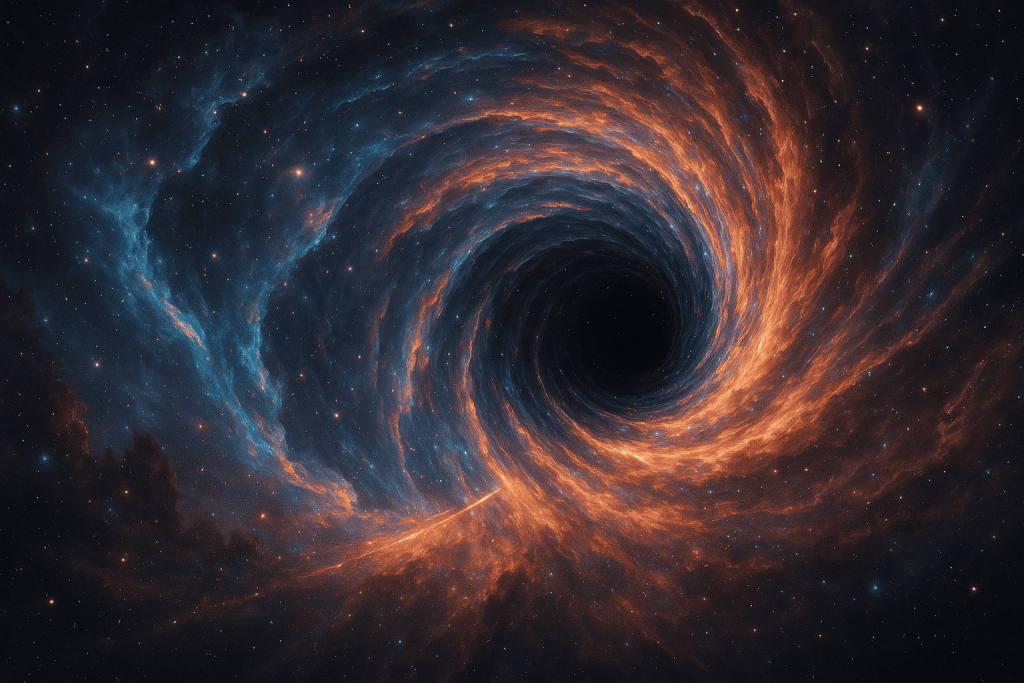
A wormhole is a hypothetical tunnel connecting two points in spacetime—like a shortcut through the universe.
- If one end of the wormhole is accelerated to near-light speed and then returned, relativity would make one side “younger” than the other.
- In theory, traveling through this wormhole could let you go back in time.
But there are massive challenges:
- Wormholes require negative energy to stay open (which may or may not exist in usable forms).
- Even if they exist, they may collapse instantly or be too small.
Cosmic Strings: Threads Through Time
Cosmic strings are hypothetical 1D defects in the universe’s fabric. If two such strings passed each other at high speeds, they might warp spacetime enough to allow closed time-like curves—loops that could permit time travel to the past.
Again, purely theoretical. No such strings have ever been found.
The Grandfather Paradox and Time Travel Puzzles
One of the most famous problems in time travel is the Grandfather Paradox:
“What happens if you go back in time and prevent your grandfather from meeting your grandmother? Would you still exist to go back in time?”
This type of logic puzzle has baffled scientists and philosophers alike.
Possible Solutions:
- Multiverse Theory: Each change creates a new timeline—you didn’t change your past, you created an alternate future.
- Consistency Principle (Novikov): Time travel is allowed, but you can’t change events in ways that would cause a paradox. Everything you do was always part of history.
Where Science Draws the Line
Theoretically Possible:
- Traveling to the future via time dilation.
- Wormholes and spacetime warping (on paper).
Not Yet Possible:
- Controlled, safe wormholes.
- Traveling backward in time without paradox.
- Infinite energy or exotic matter sources.
Major Obstacles:
- Energy requirements: Manipulating spacetime would need massive energy—far beyond our capabilities.
- Negative mass or exotic matter: Required to stabilize wormholes, but not found in practical quantities.
- Causality violations: The universe might have laws that prevent backward time travel to preserve cause and effect.
Experiments and Theories in Progress
- CERN and particle accelerators are testing the limits of time and causality in high-energy physics.
- Quantum entanglement and delayed-choice experiments hint that quantum mechanics might bend our understanding of time.
- AI-powered simulations and quantum computing may help us test time-loop scenarios in virtual universes.
Time Travel in Popular Culture vs Reality
| Fictional Idea | Scientific Reality |
|---|---|
| Time machine in a car (Back to the Future) | Fun, but purely fictional |
| Time loops (Groundhog Day) | Theoretical in quantum physics, not proven |
| Cryosleep or hibernation | Biologically plausible, under research |
| Instantaneous teleportation | Not the same as time travel, but entanglement hints at new physics |
Final Thoughts: Should We Even Try?
Time travel is more than a fantasy—it’s a frontier of science that stretches our understanding of space, time, and the universe itself. While traveling to the future is already part of physics, traveling to the past remains deeply mysterious and perhaps forever forbidden.
Still, studying time travel pushes us to answer some of the biggest questions:
- Is the universe deterministic or free-willed?
- Can we rewrite history?
- Is the future already written?
Whether or not we ever build a time machine, exploring the science behind it might bring us closer to understanding the nature of reality itself.